Petrochemicals
As early as the end of the seventies, the Guichon Company started to extend its know-how in the field of special valves to the fabrication of large size valves, mostly gate and slide valves, which are widely used in the petrochemical industry.
In the past 20 years, this know-how combined with the experience of difficult working conditions, especially high temperatures and very abrasive fluids such as catalysts, have conducted our company to design and manufacture special valves, for example transfer and decoking line valves for ethylene steam crackers, with sizes up to 42″. We have also established a partnership with the French Petroleum Institute (IFP) to produce special valves for FCC and CCR units.
Guichon manufactures valves specially adapted to ethylene cracking:
Transfer Line and Decoke Valve
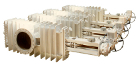
| Slide gate valve w. fixed seats Type: 205 DN 4″ to 40″ Class 150 to 300 Lbs – Fabricated (welded) construction – Carbon steels or low alloy steels |
 |
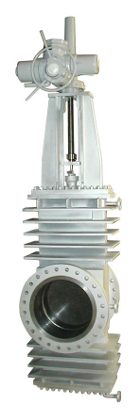
| Slide gate valve with floating seats Type: 202 DN 4″ to 40″ Class 150 Lbs – Fabricated (welded) construction – Carbon steels or low alloy steels |
 |
| Double disc through conduit gate valve Type: TLV3 DN 6″ to 56″ Class 150 to 600 Lbs – Fabricated (welded) or cast – Custom materials |
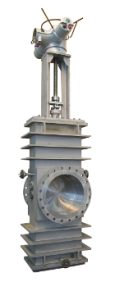 |
Manufacturing
- Construction materials: Carbon Steel (CS), Stainless Steel (SS), Duplex & Super Duplex, Titanium, Zirconium, Uranus® B6, Tantalum, Nickel, Hastelloy®, Monel
- Construction methods: Fabricated (Welded), Cast, Solid/Forged
Uses
- Service conditions: High pressure, High temperature, Abrasion, Corrosion, High viscosity, Reliability, Dead space free
- Types of fluids: Liquids, Liquids with solid particles – Slurry, Gas, Powder and powdery media, High viscosity fluids
FAQ – Ethylene cracking
Ethylene cracking – Chemical formula:
Ethane = Ethylene + Hydrogen
C2H6 = C2H4 + H2
Ethylene = C2H1
Cracking processes: simplified cracking process diagram

Cracking process – Recommended valves:
The constraints related to steam cracking are:
1 – The thermal cracking phase of the process generates effluent with coke particles
2 – The decoking phase of the process generates coke particles that can drop into the valve body during the opening-closing phase and damage the sealing system.
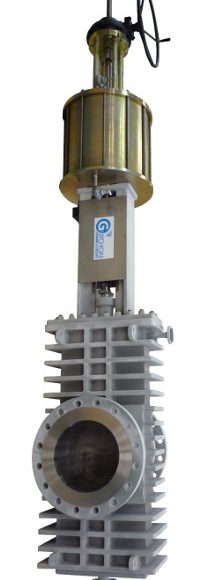
Guichon Valves proposes a valve design with sliding gate and sleeve combination to reduce ingress of coke particles. The third generation of Guichon Valves’s Transfer Line Valves, TLV03 (Transfer Line Valve), provides reliable, long-lasting tight shut-off.
Guichon manufactures valves specially adapted to the production of FCC:
Ball and plug valve, Slide valve, Gate valve
| Ball valve Type: 355 CTV DN 3″ or 4″ Class 300 Lbs – Catalyst tight valve – Single acting pneumatic actuator – A351 CF8C |
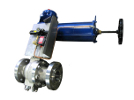 |
| Double slab valve for high temperature Type: 208 DN 1″ to 8″ Class 150 to 2500 Lbs – Fabricated (welded) construction – Stainless steel and special alloys |
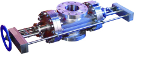 |
| Gate valve Type: 705N DN 8″ Class 300 Lbs – Finned gland – Pneumatic actuator – 321 Stainless steel |
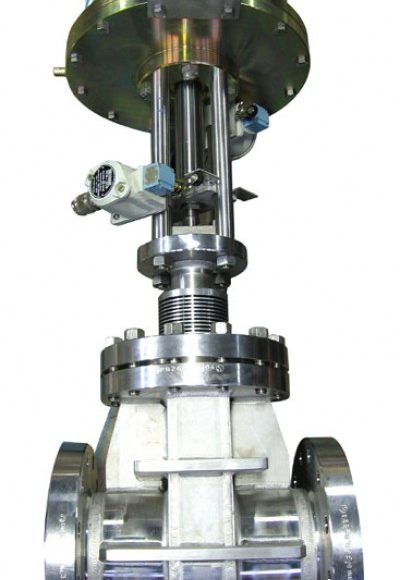 |
Manufacturing
- Construction materials: Carbon Steel (CS), Stainless Steel (SS), Duplex & Super Duplex, Titanium, Zirconium, Uranus® B6, Tantalum, Nickel, Hastelloy®, Monel
- Construction methods: Fabricated (Welded), Cast, Solid
Uses
- Service conditions: High pressure, High temperature, Low temperature, Abrasion, Corrosion, High viscosity, Vacuum, Reliability, Low acoustic signature, Dead space free
- Types of fluids: Liquids, Liquids with solid particles – Slurry, Gas, Powder and powdery media, High viscosity fluids
FAQ – Fluid Catalytic Cracking (FCC)
Fluid Catalytic Cracking (FCC):
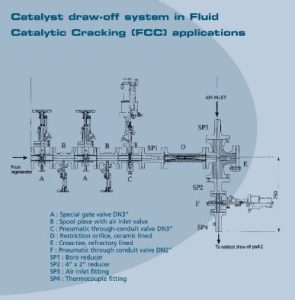
FCC – Fluid Catalytic Cracking – Recommended valves:
The main requirements of FCC applications are:
– Resistance to abrasion
– High temperature suitability
– Long life and reliability
Guichon produces valves with all weldable high temperature materials, also ceramic, concrete, and full stellite linings allowing for longer service and improved safety.


Guichon manufactures valves specially adapted to the CCR process (Catalytic Reforming):
Ball and plug valve, Slide valve
| Ball valve Type: 355 CTV DN 3″ or 4″ Class 300 Lbs – Catalyst tight valve – Single acting pneumatic actuator – A351 CF8C |
 |
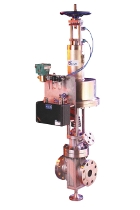
| Slide gate valve for high temperature Type: 207 DN 3″ Class 300 Lbs – Fabricated (welded) construction – Pneumatic actuator – 321 stainless steel |
 |
Manufacturing
- Construction materials: Carbon Steel (CS), Stainless Steel (SS), Duplex & Super Duplex, Titanium, Zirconium, Uranus® B6, Tantalum, Nickel, Hastelloy®, Monel
- Construction methods: Fabricated (Welded), Cast, Solid
Uses
- Service conditions: High pressure, High temperature, Low temperature, Abrasion, Corrosion, High viscosity, Vacuum, Reliability, Low acoustic signature, Dead space free
- Types of fluids: Liquids, Liquids with solid particles – Slurry, Gas, Powder and powdery media, High viscosity fluids
Guichon manufactures valves specially adapted to dichloroethane production:
Slide valves
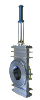
| Slide valve Type: 202N DN 12″ Class 150 Lbs – Hydraulic actuator |
 |
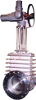
| Parallel seated gate valve Type: 706 DN 1″ to 16″ Class 150 to 600 Lbs – Fabricated (welded) construction – Stainless and duplex steels, nickel alloys, special alloys |
 |
Manufacturing
- Construction materials: Carbon Steel (CS), Stainless Steel (SS), Duplex & Super Duplex, Titanium, Zirconium, Uranus® B6, Tantalum, Nickel, Hastelloy®, Monel
- Construction methods: Fabricated (Welded), Cast, Solid
Uses
- Service conditions: High pressure, High temperature, Low temperature, Abrasion, Corrosion, High viscosity, Vacuum, Reliability, Low acoustic signature, Dead space free
- Types of fluids: Liquids, Liquids with solid particles – Slurry, Gas, Powder and powdery media, High viscosity fluids
FAQ – Dichloroethane
Dichloroethane (ethylene dichloride) – Chemical formula:
C2H4Cl2
Dichloroethane (ethylene dichloride) – Uses of Dichloroethane:
– Production of ethylenediamine, ethylene glycol, polyvinyl chloride, nylon, rayon, and various plastics
– Solvent for grease, oils, waxes, resins, rubber, and spice extraction
– Fumigation of grains (cereals), orchards, etc.
– Manufacture of paints, varnishes, stain removers, soaps, cleaning products, etc.
Dichloroethane (ethylene dichloride) – Manufacturing process for Dichloroethane:
1,2-dichloroethane (DCE), also known as “ethylene dichloride” (EDC), is primarily used in the production of vinyl chloride monomer (VCM), the main precursor for PVC polymer.
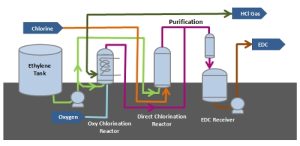
DCE is mainly produced by direct chlorination or oxychlorination of ethylene. Most plants use an integrated process with VCM production. The production of VCM generates large amounts of hydrochloric acid (HCl), which is reintroduced into the DCE production stage. By employing both oxychlorination and direct chlorination of ethylene, the overall process eliminates HCl management issues. This technology, also known as the “balanced process,” is used in most developed regions.
Direct chlorination is carried out in the liquid phase between chlorine and ethylene in the presence of ferric chloride (FeCl3) catalyst. This reaction can occur at low temperatures (20-70°C) or high temperatures (100-150°C).
The low-temperature process generates fewer by-products but requires more energy in the DCE purification stage. On the other hand, the high-temperature process optimizes energy balance by recovering reaction heat for distillation.
In the oxychlorination reactor, pure ethylene, hydrochloric acid, and oxygen react together at temperatures between 200-300°C, under a pressure of 4-6 bars, in the presence of a catalyst (often copper chloride CuCl2). The reaction occurs in either a fixed bed or a fluidized bed. The fluidized bed configuration is preferred due to easier temperature control. Recent discoveries in catalyst selection indicate the potential for high-quality DCE production while eliminating the distillation stage.
Dichloroethane (ethylene dichloride) – Recommended valves:
Valves used in this process must be resistant to corrosion.
Guichon manufactures valves specially adapted to cracked gas production:
Globe valve, Gate valve, Slide valve, Butterfly valve
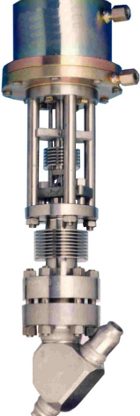
| Globe valve for high temperature service Type: 505 DN 1/2″ to 12″ Class 150 to 300 Lbs – Manual or motorized operation |
 |
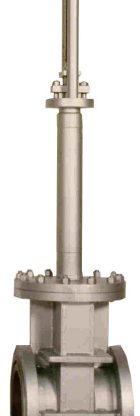
| Bellow sealed gate valve Type: 709 DN 1/2″ to 12″ Class 150 to 300 Lbs – Fabricated (welded) valve – Stainless and duplex steels, nickel alloys, special alloys |
 |
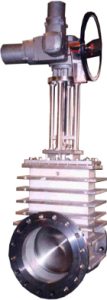
| Parallel seated gate valve Type: 706 DN 1″ to 16″ Class 150 to 300 Lbs – Fabricated (welded) construction – Stainless and duplex steels, nickel alloys, special alloys |
 |
Manufacturing
- Construction materials: Carbon Steel (CS), Stainless Steel (SS), Duplex & Super Duplex, Titanium, Zirconium, Uranus® B6, Tantalum, Nickel, Hastelloy®, Monel
- Construction methods: Fabricated (Welded), Cast, Solid
Uses
- Service conditions: High pressure, High temperature, Low temperature, Abrasion, Corrosion, High viscosity, Vacuum, Reliability, Low acoustic signature, Dead space free
- Types of fluids: Liquids, Liquids with solid particles – Slurry, Gas, Powder and powdery media, High viscosity fluids
Guichon manufactures valves specially adapted to the production of Liquid sulfur:
Sampling valve, Slide valve, Butterfly valve
| Sampling valve Type: 655C DN 3/4″ to 1/2″ Class 150 Lbs – Fully jacketed |
 |
| Sampling valve Type: 655M DN 3/4″ x 1/2″ Class up to Class 600 – PTFE/glass packing |
 |
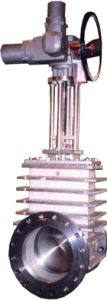
| Parallel seated gate valve Type: 706 DN 1″ to 16″ Class 150 to 300 Lbs – Fabricated (welded) construction – Stainless and duplex steels, nickel alloys, special alloys |
 |
Manufacturing
- Construction materials: Carbon Steel (CS), Stainless Steel (SS), Duplex & Super Duplex, Titanium, Zirconium, Uranus® B6, Tantalum, Nickel, Hastelloy®, Monel
- Construction methods: Fabricated (Welded), Cast, Solid
Uses
- Service conditions: High pressure, High temperature, Low temperature, Abrasion, Corrosion, High viscosity, Vacuum, Reliability, Low acoustic signature, Dead space free
- Types of fluids: Liquids, Liquids with solid particles – Slurry, Gas, Powder and powdery media, High viscosity fluids
FAQ – Liquid sulfur
Liquid sulfur – Chemical formula:
S8
Liquid sulfur – Uses of Liquid sulfur:
Sulfur is used in the manufacturing of sulfuric acid, fertilizers, pesticides, and rubber.
Liquid sulfur – Manufacturing process of Liquid sulfur:
Liquid sulfur is obtained from fossil carbon-based resources such as oil and natural gas in the form of hydrogen sulfide gas (H2S). Gases with an H2S content of over 25% can be used in refineries to extract sulfur.
The Claus process (see Figure 1) is by far the most widely used method for desulfurization in the industry, enabling the recovery of elemental sulfur contained in hydrogen sulfide gas. This process is divided into two main stages: a thermal stage (in a furnace at over 850°C) and a catalytic stage.
The catalytic stage includes three sub-stages:
– **Heating**: The gas is reheated and introduced into the catalytic bed.
– **Catalytic reaction**: The remaining H2S reacts with SO2 at lower temperatures (200-350°C) in the presence of a catalyst to form more sulfur. Since the reaction is not complete, two or three passes through this type of reactor are necessary.
– **Cooling and condensation**: In the sulfur condensers, the process gas from the catalytic reactors is cooled to 130-150°C. Sulfur is recovered after each pass through the reactors.
**Figure 1.** Schematic of a 3-reactor Claus process for sulfur recovery in a “straight-through” configuration
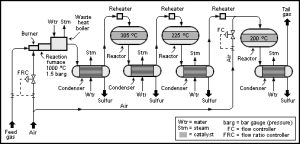
Over the years, the Claus process has been adapted to handle different feed gas compositions (e.g., high CO2 or ammonia content) and improve its efficiency (conversion rates, energy consumption, installation costs). Most sulfur recovery units use modified processes such as “straight-forward,” split-flow, or direct oxidation.
Liquid sulfur – Recommended valves:
This process is highly aggressive for valves, which must generally be made from alloy materials.