
Cryogenics
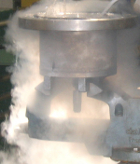 The experience of Guichon Valves in the design of cryogenic valves (-196°C) has been recognized worldwide for over 20 years. The company has developed and industrialized cryogenic sectioning equipment based on technologies of gate valves (models approved by Air Liquide), metal-seated butterfly valves, and ball valves. These equipments have various applications in the liquefied gas industry, as well as in fine chemicals.
Molten Salts
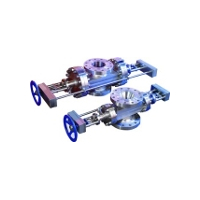
Guichon manufactures valves specially adapted to Molten salts
Gate valve (700) (702), Tank Bottom Valve (602) (607), Plug Valve (500) (503)
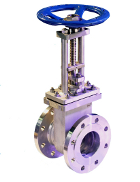
| Gate valve Type: 700NDN 3/8″ to 36″ PN 10 to 250 – Welded construction – Stainless steels or alloys |
 |
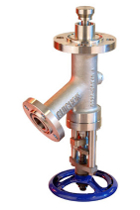
| Tank bottom valve Type: 603MDN 3/4″ to 16″ PN 10 to 150 – Cast construction – Stainless steels and alloys |
 |
Manufacturing
- Materials: Stainless Steel, Special Alloys
- Construction method: Welded, Cast, Solid
Uses
- Service conditions: High temperature, Low pressure
- Types of fluids: Liquids, Slurry, High viscosity fluids
FAQ – Molten Salts
Molten Salts – Chemical formula:
– Nitrates: KNO3-NaNO2-NaNO3, etc…
– Carbonates: Na2CO3, K2CO3, Li2CO3-K2CO3, Na2CO3, etc…
– Fluorides: LiF-NaF-KF, etc…
– Chlorides: NaCl, KCl, CaCl2, Li-Cl-KCl, ZnCl2, etc…
– Etc…
Molten Salts – Uses of Molten Salts
– Production of reactive metals and refractory metals
– Heat transfer fluids and thermal storage (fluoride, chloride, and nitrate)
Molten Salts – Manufacturing process of Molten Salts
– High heat transfer capacity
– Ability to reach very high temperatures (> 700°C)
– Electrical conductivity.
Molten salts have been used in many industries as high-temperature heat transfer fluids. Depending on the required temperature for a specific application, molten salts can be classified as shown in the table below:
| Operating Temperature | 150-250°C | 250-400°C | 450-1000°C |
| Molten Salt System | Alkaline chlorides, aluminum chlorides | Nitrates, nitrites, alkaline hydroxides | Halides, sulfates, alkaline carbonates |
The production of steam in solar thermal power plants is a good example of how molten salts can be used as heat transfer fluids (see the following figure):


Operating around atmospheric pressure reduces the mechanical stress experienced by the system, which simplifies the mechanical design aspects. The material in contact with the molten salt is sometimes subjected to corrosion. However, the corrosion rate is strongly dependent on the type of molten salt, operating temperature, and fluid velocity. Coatings may be required.