Since the early 1980s, the Guichon Company has been manufacturing valves for the industrial sectors of plastics and polymers, whose main applications are artificial, synthetic and chemical fibers.
All Guichon’s valves being made on order, they can be easily adapted to meet the specific requirements of Engineerings Companies and producers of these products. This great flexibility allows Guichon Valves to offer all adaptations and design alternatives required for handling high viscosity liquids.
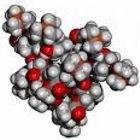
The main processes addressed are:
Polypropylene (PP)
Usage: Food packaging, textiles (nonwoven fibers), automotive parts.
Properties: Lightweight, heat resistant.
Polyvinyl Chloride (PVC)
Usage: Tubes, windows, flooring, cables.
Properties: Rigid or flexible depending on the plasticizers added.
Polystyrene (PS)
Usage: Food packaging, insulators (expanded foam), cups.
Variants: Crystal (rigid and transparent), expanded (EPS).
Polyethylene Terephthalate (PET)
Usage: Bottles, food films, textiles (polyester).
Properties: Transparent, durable, recyclable.
Polytetrafluoroethylene (PTFE, Teflon)
Usage: Non-stick coatings, electrical insulators.
Properties: Highly resistant to chemicals and heat.
Guichon manufactures valves specially adapted to polymers production :
Check valve & Sight glasses & Strainers, Multiways valve, Globe valve, Tank bottom valve
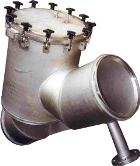
| Strainer Type : 802 DN 12″ Class 150 Lbs – Filtration 2 mm – Butt-weld ends – Stainless steel 304L |
 |
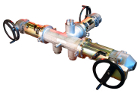
| 4-way piston Valve DN 3″x3″x3″x3″ Class 300 Lbs – Rotating pistons – AISI 316 Ti (1.4571) stainless steel |
 |
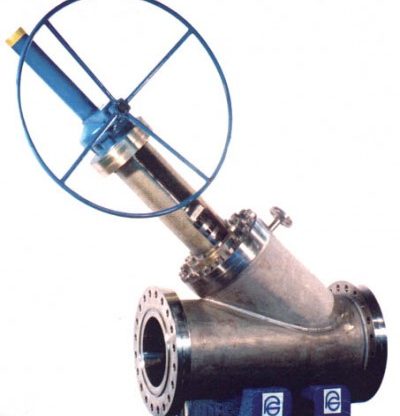
| Globe valve DN 14″ Class 600 Lbs – Manual gear operator – Heating jacket |
 |
Fabrication
- Construction materials: Carbon Steel (CS), Stainless Steel (SS), Duplex & Super Duplex, Titanium, Zirconium, Uranus® B6, Tantalum, Nickel, Hastelloy®, Monel
- Construction methods: Fabricated (Welded), Cast, Solid
Uses
- Service conditions: High pressure, High temperature, Low temperature, Abrasion, Corrosion, High viscosity, Vacuum, Reliability, Low acoustic signature, Dead space free
- Types of fluids: Liquids, Liquids with solid particles, Gas, Powder and powdery media, High viscosity fluids
FAQ – PE – Polyethylene – an example of a polymer
PE – Polyethylene – Chemical formula:
PE – Polyethylene – Uses of Polyethylene (PE):
PE – Polyethylene – Manufacturing process of Polyethylene (PE):
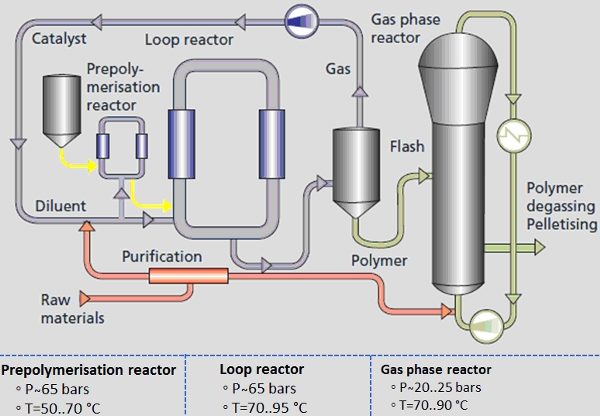
Currently, polyethylene is primarily produced in suspension processes, fluidized bed gas-phase reactors, or a series combination of these systems (such as Spherilene and Borstar processes). The suspension polymerization uses either a loop reactor or a stirred autoclave reactor in the presence of a catalyst and diluent. The following image shows the configuration of the Borstar process, which includes a loop reactor in series with a gas-phase fluidized bed reactor.