Special Valves: Valves with Heating Jackets
The Problem:
One challenge in the field of chemicals, petrochemicals, cryogenics, nuclear, or polymers is maintaining the fluid produced in industrial lines at a specific temperature so that its properties can be conserved throughout the manufacturing process.
The Solution: 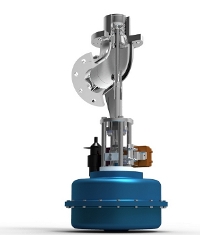
♦ Customized valves enclosed in a “jacket” rather than the alternative “electric trace heating”*
A heating jacket can:
– Maintain the required temperature for the fluid flowing through the valve
– Provide a more cost-effective solution for the finished product (compared with electric trace heating)
– Help eliminate the risk of explosion if the product is installed in a dangerous environment.
For certain applications, Guichon can design a valve fitted with a “vacuum” jacket to ensure additional safety in case of perforation of the valve body by the fluid.
Examples of custom jacketed valves: More than 90 years of industrial experience
| Possibility to separate the heating or cooling zones on the same valve, so that only one part of the circuit can be drained |  |
3 Way valve – DN 100x100x100, 3 separate heating chambers |
| Possibility to reduce the number of heating connections (piping constraints, space constraints, cost, etc.) by guiding the fluid through a system of internal walls. | 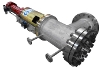 |
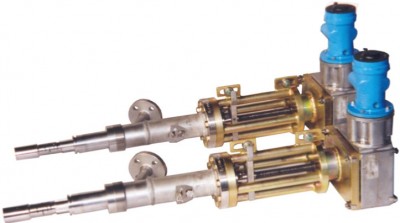
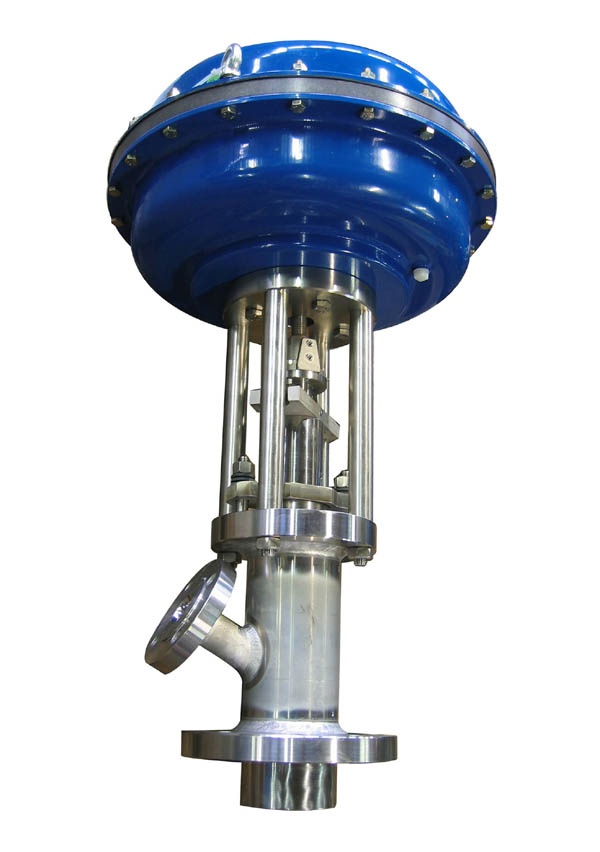
Tank bottom Piston valve with heating jacket for polymerizer application |
| Possibility to retrofit an existing valve with a heating jacket | 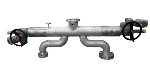 |
Jacketed 3 Way piston valve, type 604C with shape adapted to the constraints of the customer’s application |
| Possibility to make a cast jacket using 2 half shells depending on the size and quantity. | 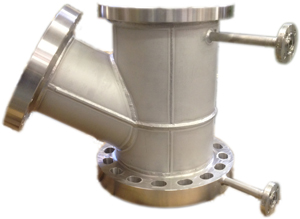 |
Tank Bottom Valve with cast jacket (2 half shells) adapted to the size of the product |
| Possibility to jacket the flanges of the valve. |  |
Jacketed drain valve 607C DN80x50 |
| For the higher temperatures, Guichon Valves recommends insulation. The valve can be supplied with an insulated hood (Rockwool for example) helping to avoid energy loss while protecting the personnel taking the sample. | 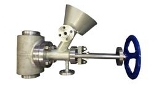 |
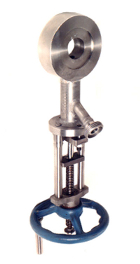
Sampling valve with heating jacket and protective hood – Type 609C DN100/25 |
* (The temperature is maintained thanks to heating elements arranged around the valve)
Characteristics
| Definition of Heating Jacket | A metal enclosure installed around the body or whole of the valve with the purpose of maintaining the temperature of the fluid flowing through the valve. |
| How it Works | The jacket is supplied with a heat transfer fluid that can be either gaseous (steam) or liquid (oil such as Therminol 66 for example, which has a powerful capacity to produce heat). The supply of the heat transfer fluid can be done in several ways: via an injection port, directly to the flange, through welded ends, by a three-piece connection, etc. For low temperature use: 60 to 80°C (hot water is sufficient). For high temperature use: 280 to 300°C (use of a special fluid). |
| Applicable Fluids | Products requiring temperature control (hot or cold), notably polymers where a change in temperature can cause the product to cure or harden. |
| Applicable Valves | A heating jacket is an option that can be added to any valve in our product range. |
| Jacket Materials | This is defined based on the process conditions and environment of the valve, as well as the fluid passing through it. In most cases, stainless steel is used. |
| Thickness | The jacket thickness is defined based on the service conditions of the valve. |
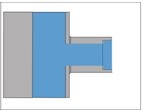
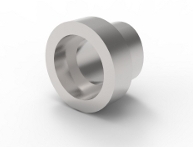
| Connections | Flanges, butt welded, NPT threaded connections, and others. |
| Flanged Connections
|
 |
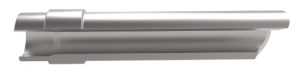
| Buttwelding (Buttwelding-BLS) Connection
|
 |
| Socket Weld Connection
|
|
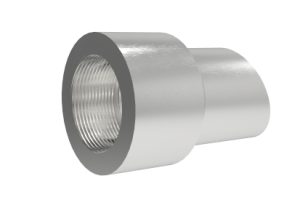
| NPT / GAS Threaded Connection
|
 |
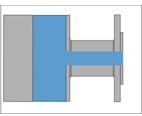
| Three-Piece Connection |  |


Heating Jacket Design

The heating jacket design is carried out simultaneously with the valve design.
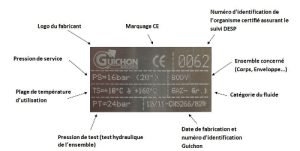
The heating jacket is considered a pressure vessel, just like a valve body or piping. It is therefore subject to the Pressure Equipment Directive (PED). Pressure equipment can be dangerous, as a considerable amount of energy is likely to be stored. The danger is even greater if the fluid inside is hazardous (flammable, toxic, etc.). This directive allows for the classification of pressure equipment into categories defined by various criteria (pressure, fluid type, etc.). Depending on the category, it is mandatory to affix a PED (Pressure Equipment Directive) identification plate that includes several elements.
Example of a typical PED identification plate:
Production
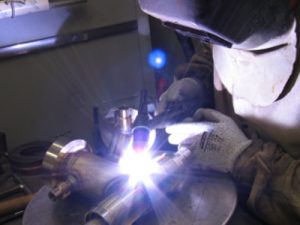
Interview with Pierre M., Welding Shop Supervisor:
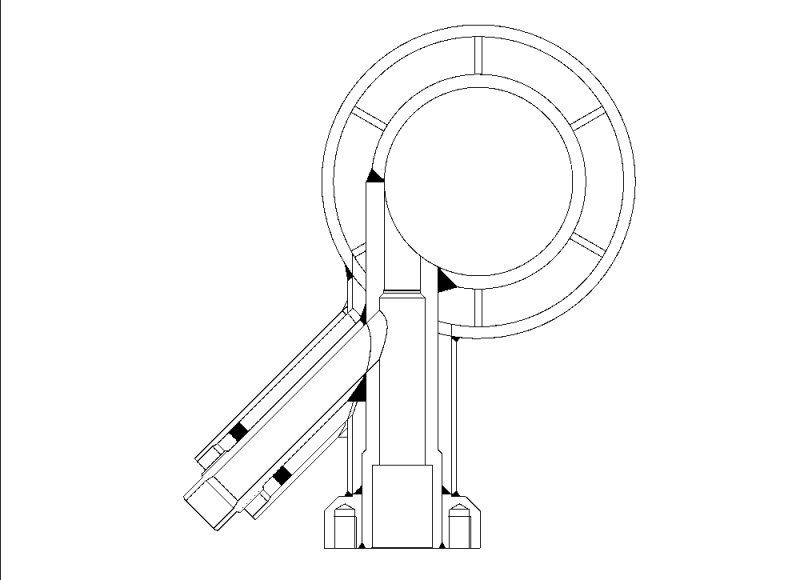
“As welders, we work from cut planes where we identify the different parts of the heating jacket, the tab position, and the welding points, as shown in the example below:
The steps:
♦ Identify the positioning of the blocks/pieces that will form the jacket.
♦ Machining of blocks/pieces.
♦ Finishing grinding provides a better welding surface and also has a significant impact on the overall aesthetics of the finished valve.
Radiographic testing is not possible for this option due to the difficulty of inserting the film inside the jacket. Therefore, we perform 100% liquid penetrant testing.
Everything is prepared to ensure the weld is as precise as possible. Welding a heating jacket is a very delicate and careful process that we control perfectly.”